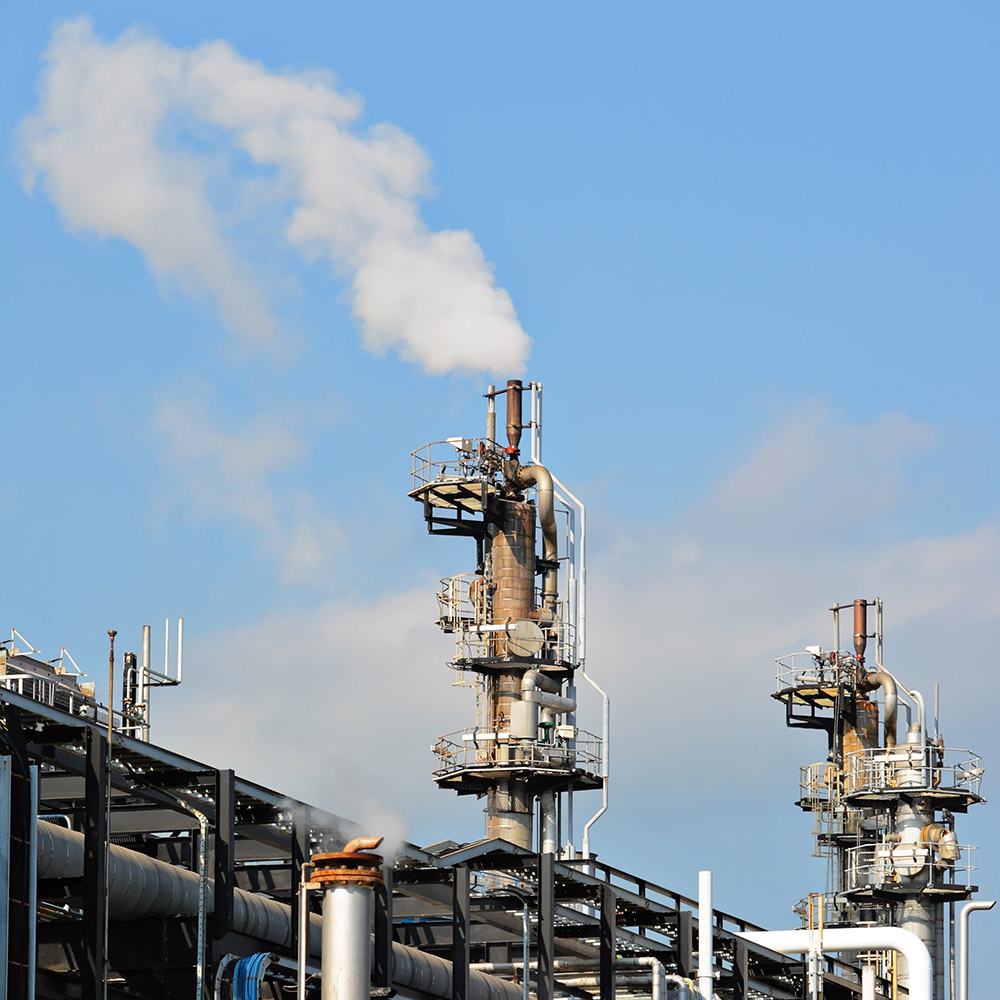
We implement the practice of natural gas flaring as a way of safely managing gas output from our oil production especially in situations where not doing so poses potential risk to our facilities and employees.
Flaring is often utilized for two main reasons: when associated gas is produced during oil production and/or when there are no facilities available to manage the gas.
Natural gas flaring is the controlled combustion of volatile hydrocarbons
In early 2019, our North America operation was significantly impacted by third-party facility outages, leading to a significantly increase in flaring volumes over a period of 60 days. By 2020, we reduced the North America drilling and completion activities by 84% and 87% respectively, which led to a reduction in the associated operational flaring.
Repurposing Gas Output Through Innovation
One of the leading contributors to flaring is unplanned pipeline downtime. This is why we partner with third-party operators to implement strategies that mitigate potential pipeline constraints reducing the need for flaring.
While flaring is an industry best practice in disposing of excess gas, we are constantly looking for creative ways to find efficiencies and repurpose production outputs that decrease reliance on flaring, where possible.